A first-of-its-kind trial has shown the benefits of an eight week multidisciplinary breathlessness intervention program for patients with moderate to severe COPD, highlighting the value of non-pharmacological interventions.
The research, published in Thorax, included 113 patients with moderate/severe COPD, randomised to either an eight week intervention which included breathing techniques, handheld fan use, energy conservation and dietetic advice, or a wait-list control group [link here].
Patients in the breathlessness intervention group showed statistically significant and clinically meaningful improvements after two months compared with the control group, including breathlessness mastery (0.5 unit difference), dysponea (0.4 units) and fatigue (.4 units).
The intervention group also saw improvements on exertional breathlessness and breathlessness unpleasantness measures.
There was a high rate of exacerbations during the study period across both groups, with 59% of the intervention group and 46% of the control group experiencing at least one exacerbation.
Neither anxiety or depression, as measured by the Hospital Anxiety and Depression Scales, improved for patients who completed the breathlessness program in comparison to the control group.
Study co-author and respiratory and sleep physician Dr Tracy Smith told the limbic respiratory physicians should view the results as confirmation that breathlessness intervention services were effective at relieving breathlessness for patients with COPD.
“Additionally, this trial suggests that breathlessness intervention services are effective in the Australian population – all previous trials were done in Europe,” she said.
“Physicians often want to reach for their prescription pad when patients have unrelieved symptoms. Recent trials of pharmacotherapy including opioids and mirtazapine for breathlessness have been negative. This trial suggests that using a range of non-pharmacological interventions helps.”
There are a number of breathlessness intervention service programs in Australia, but patient access is dependent on what is available in their local area.
Policymakers should consider supporting the development of more of these supports given the results of this trial, Dr Smith said.
“We are working on a health economic analysis of this trial to give support the economics of BIS in the Australian context, but European health economic assessments have generally been favourable.”
Putting breathlessness management skills in practice
Where such programs are not available, there are still opportunities for respiratory physicians to pass on some of the techniques used in these programs to patients – from using a battery-operated handheld fan to using different body positions to relieve breathlessness.
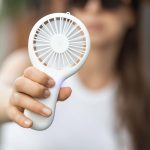
Breathless management techniques including the use of a handheld fan could be useful for patients with moderate to severe COPD.
“Each of these can be explained quickly. Give patients a single tip at each appointment, and build over time. If it’s available, getting help from nursing or allied health colleagues to build and reinforce these techniques can help,” Dr Smith said.
Clinical nurse consultant and study co-author Mary Roberts said the findings were also encouraging for nurses and allied heath professionals working with COPD patients.
“This trial can reassure nurses and allied health that they can help patients control their breathlessness and get on with living without relying on pharmacotherapy,” she said.
“This is especially important since recent studies highlighting the lack of efficacy of opiods and benzodiazapines.”