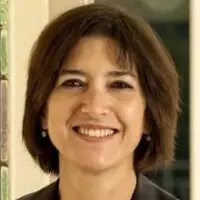
Senior author Professor Christine McDonald
Ambulatory oxygen prescribed for exertional desaturation in fibrotic interstitial lung disease may not deliver the functional benefits many clinicians expect, an Australian-led RCT has found.
Researchers found daily activity, symptoms and quality of life were no better than with a sham device. They say the findings suggest that routine ambulatory oxygen use in this population “might not be indicated”.
The Pulmonary Fibrosis ambulatory Oxygen (PFOX) trial, published in The Lancet Respiratory Medicine [link here], enrolled 116 adults with fibrotic ILD across seven centres in Australia and Sweden. All participants had isolated exertional hypoxaemia, defined as oxygen saturation of 88% or lower during a six-minute walk test, but did not qualify for long-term oxygen therapy at rest.
No lift in daily activity
Participants were randomly assigned to receive ambulatory oxygen via a portable concentrator set at maximum pulsed flow, or an identical sham device delivering air, with participants and clinicians masked to allocation.
At three months, step counts had fallen by 271 steps per day in the oxygen group and risen by 64 steps per day in the air group. The between-group difference was not statistically significant, with no signal of benefit at six months.
Baseline activity levels were already markedly reduced. Participants averaged roughly 2800–3000 steps per day, reflecting the substantial functional limitation associated with fibrotic ILD, according to the authors.
Secondary outcomes – including health-related quality of life, fatigue, anxiety and depression – likewise showed no clinically meaningful advantage for oxygen.
Importantly, the confidence intervals excluded the previously proposed minimal clinically important difference for daily step count in idiopathic pulmonary fibrosis, suggesting a clinically meaningful effect was unlikely, the authors said.
Oxygen that does not correct hypoxaemia
Despite being set at maximum output, portable concentrator oxygen did not significantly alter mean daily SpO₂, minimum SpO₂, or time spent at or below 88%.
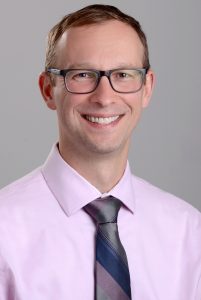
Dr Kristopher Clark
In a linked commentary [link here], pulmonary and critical care specialists Dr Kristopher Clark from the State University of New York and Dr Daniel Kass from the University of Pittsburgh described the trial as a “well-executed, multicentre” study and praised its use of step count – a real-world endpoint aligned with how patients “feel and function”.
However, they argued the findings may say more about the limitations of portable concentrator delivery than about ambulatory oxygen therapy itself.
“If exertional hypoxaemia is the driver of dyspnoea, reduced activity and impaired quality of life, then correcting hypoxaemia should be the solution”, they wrote. The difficulty, they suggested, is that in PFOX, supplemental oxygen delivered via portable concentrator did not reliably correct hypoxaemia in many participants.
Individuals receiving oxygen had similar minimum saturations and spent a similar proportion of time at or below 88% compared with those receiving sham air.
Drs Clark and Kass argued this likely reflects a “one-size-fits-all” approach using fixed portable concentrator settings. Pulse-dose portable concentrators cannot deliver high continuous flows, and retrospective data suggest some patients with ILD may require substantially higher flow rates during maximal exertion – in some cases up to 15 L/min – to prevent desaturation.
They pointed to the only other published real-world ambulatory oxygen trial in ILD, in which compressed oxygen cylinders were titrated during a six-minute walk test to maintain SpO₂ at or above 90% (up to 6 L/min), and which demonstrated improvements in quality-of-life measures.
Higher-level exercise testing may better predict real-world desaturation than the six-minute walk test, they suggested, and oxygen titrated to exertional need – potentially using cylinders or liquid oxygen – might produce different results.
Drs Clark and Kass said the PFOX findings highlight the need for more targeted trials examining higher-flow delivery systems.
“As physicians, we will continue to provide our patients with oxygen devices, including high-flow delivery, titrated to relieve hypoxaemia across a range of exertional activities,” they wrote.
“However, we can only point to our anecdotal experience… we believe that this is indeed an art in need of more science.”
They also noted that liquid oxygen, which may offer a better balance of flow, portability and duration, is now rarely available in some jurisdictions, limiting practical options for high-flow ambulatory delivery.
Burden and behaviour outside the lab
Ambulatory oxygen for exertional desaturation carries only conditional support in international guidelines, reflecting the limits of the underlying evidence, said the papear’s final author, Professor Christine McDonald, who is also director of the Department of Respiratory and Sleep Medicine at Austin Health.
“The supporting evidence for ambulatory oxygen is thin, which is why the guidance remains conditional,” she told the limbic.
She noted that much of the foundational oxygen research cames from decades-old COPD trials in patients with severe resting hypoxaemia, a very different population from those with exertional-only desaturation.
The evidence base is also complicated by methodological limitations in earlier studies. Many ambulatory oxygen trials compared oxygen with no device rather than a placebo concentrator, raising the possibility that perceived improvements reflected expectancy effects rather than physiological benefit.
In addition, portable oxygen concentrators commonly used in practice may not deliver sufficient flow to prevent significant exertional desaturation in patients with ILD, who can desaturate rapidly during activity.
As a result, modest physiological gains seen in laboratory testing such as small improvements in six-minute walk distance did not always translate into meaningful benefit in everyday life, particularly for patients managing advanced disease, co-morbidities and the practical burden of oxygen equipment, she added.
Recruitment to the trial itself emphasised the burden of ambulatory oxygen, Professor McDonald noted. Of 408 eligible patients, 72% declined participation, frequently citing reluctance to use portable oxygen.
“It’s not like a tablet to take,” Professor McDonald said. “It’s a whole new lifestyle.”
Many patients with advanced ILD have significant comorbidities and functional limitations, she added, making adherence and sustained use challenging.
She also cautioned against assuming that laboratory improvements equate to meaningful home benefit.
“Any small benefit seen in the lab, such as a slightly longer six-minute walk distance, doesn’t necessarily translate into meaningful benefit in the home environment,” she said, noting that patients in laboratory studies were supported by clinical staff, whereas at home they must manage oxygen equipment on their own.
She said innovation in oxygen delivery systems remained necessary.
“We need to work with the companies producing oxygen devices to improve them – to deliver the oxygen patients need in a way that’s still portable and manageable.”
Shared decision-making in uncertainty
The authors say the findings reinforce the importance of discussing both the uncertain benefits and practical burden of therapy with patients.
“The evidence supports shared decision making regarding prescription of ambulatory oxygen in fibrotic ILD due to uncertain benefits and potential burden”, they recommend.
In practice, Professor McDonald said she does not routinely refer patients for ambulatory oxygen assessment unless they meet established criteria for long-term oxygen therapy.
“Unless someone fulfills criteria for long-term home oxygen, I don’t generally refer them for an oxygen assessment, because my clinical experience suggests it doesn’t make a huge difference for many patients.”
When patients ask about trying oxygen, she said the conversation usually focuses on the limited evidence.
“If a patient says they would like to try oxygen, I would explain that their arterial blood gases are good and we would look at what happens during a six-minute walk test,” she said. “If they desaturate, oxygen might help – but the evidence isn’t strong enough to say that it definitely will.”
She also directs attention to other dyspnoea strategies.
“We have other ways of relieving breathlessness. A simple handheld fan – even one worn around the neck – can be effective and costs very little.”
Pulmonary rehabilitation remains central.
“I would also be referring them for pulmonary rehabilitation – and repeat programs,” she said. “There’s strong evidence it works while patients are in it, but once they stop, deconditioning sets in. So it’s important to repeat those programs.”
The trial’s Australian authors spanned five states and six institutions. From Melbourne, the team included first author Prof Anne Holland, Mariana Hoffman, Prof Ian Glaspole, Dr Nicole Goh, Dr Yet Khor, Dr Leona Dowman, Dr Jyotika Prasad, Prof Natasha Smallwood, and Karen Symons (Alfred Health and Monash University), alongside Prof Christine McDonald, Lisa Fuhrmeister, and Michelle Thompson (Austin Health and the University of Melbourne), and statistician Graham Hepworth (University of Melbourne). Sydney contributors included Prof Tamera Corte, Carly Barton, and Jessica Bucciarelli from Royal Prince Alfred Hospital and the University of Sydney. From Brisbane, Prof Daniel Chambers and Dr John Mackintosh represented The Prince Charles Hospital and the University of Queensland. Andrew Palmer and Ingrid Cox rounded out the group from the Menzies Institute for Medical Research at the University of Tasmania.