
The RACP has spent $1 million of member funds on five extraordinary general meetings in six months and not one of the 19 candidates on the recent college election ballot was a woman. Endocrinologist Professor Ada Cheung FRACP makes the case for reform that’s been gathering dust since 2019.
One million dollars of member funds has been spent on five extraordinary general meetings in six months. Three of those meetings were held on the same day. Police were called to the most recent. Two competing boards have issued contradictory statements from the same registered office. The ACNC and the Australian Medical Council have both raised concerns. SafeWork NSW issued a notice in March finding the college had failed to manage harmful behaviour at board level.
This isn’t a personality dispute between two factions. It’s a governance failure that was identified, documented and handed to the Royal Australasian College of Physicians as a remediation roadmap seven years ago. The roadmap was never followed. The current crisis is the predictable cost of that inaction.
A Regulator’s Warning, Ignored
In April 2019, after sustained submissions from members, the Australian Charities and Not-for-profits Commission (ACNC) launched a formal investigation into RACP governance and culture. The investigation was serious enough that the college signed a Voluntary Compliance Agreement and engaged independent firm Effective Governance to review its structures.
Effective Governance reviewed over 25,000 pages of board papers, every college policy and conducted extensive interviews with directors, staff and council members. The final report identified six major governance failures and graded the college “developing” against the ACNC governance standards. For an organisation generating $87 million in annual revenue and representing more than 32,000 specialist physicians and trainees across Australia and New Zealand, that’s a failing grade.
The remediation roadmap was clear. Separate the president and board chair roles. Establish an independent nominations committee modelled on the Royal Australian College of General Practitioners and the Royal Australasian College of Surgeons.
Key reforms were never implemented. The ACNC closed its investigation in October 2021, but its closing letter contained a warning that now reads as prophecy: unresolved disputes would consume resources “better directed to advancing the charitable purpose of the college.” Four years later, $1 million of member funds and counting.
Where the Structural Problems Sit
Doctors don’t leave conflicts of interest to good intentions. We build systems in healthcare organisations to manage these. Ethics committees, disclosure forms, peer review, mandatory declarations on grant applications. We accept the inconvenience because we understand what happens without it. Governance does the same job at the institutional level. The RACP has three serious gaps that no functioning peak body should tolerate.
First, the president and board chair are the same person. A combined role can work for small grassroots not-for-profits with limited budgets and a handful of volunteer directors. It does not work for a multi-million dollar member-funded body representing over 32,000 specialist physicians across two countries. In every other comparable governance framework, those roles are separated. The ACNC, AICD and ASX governance principles all support separation. The chair’s job is to hold the president accountable. No one can credibly hold themselves to account, and the college’s own documentation acknowledges that “conflict and factionalism have been greater under the current combined President/Chair model.” That is the college assessing its own structure. The structure remains unchanged.
Second, candidates run for the board with no independent vetting and no required disclosures. Here’s how it actually works. A candidate writes their own paragraph. They decide what to put in it. They decide what to leave out. No one independently checks any of it. External roles, organisational affiliations, financial relationships, public advocacy that contradicts college policy, none of it has to be declared. As a fellow casting your vote, you’re working with whatever the candidate wanted you to know. The information that would actually shape an informed decision is not in the ballot pack.
Look at the current ballot. Of the 19 candidate profiles in front of members, not a single one is a woman. In a college whose trainee cohort is now majority female, that is itself a governance failure. An independent nominations committee with skills-based criteria would actively address composition gaps of this kind. The current process produces whatever a self-selecting pool of nominators puts forward.
The RACGP and RACS both use independent nominations committees with mandatory disclosure. The 2019 review specifically recommended the RACP adopt the same approach. It hasn’t.
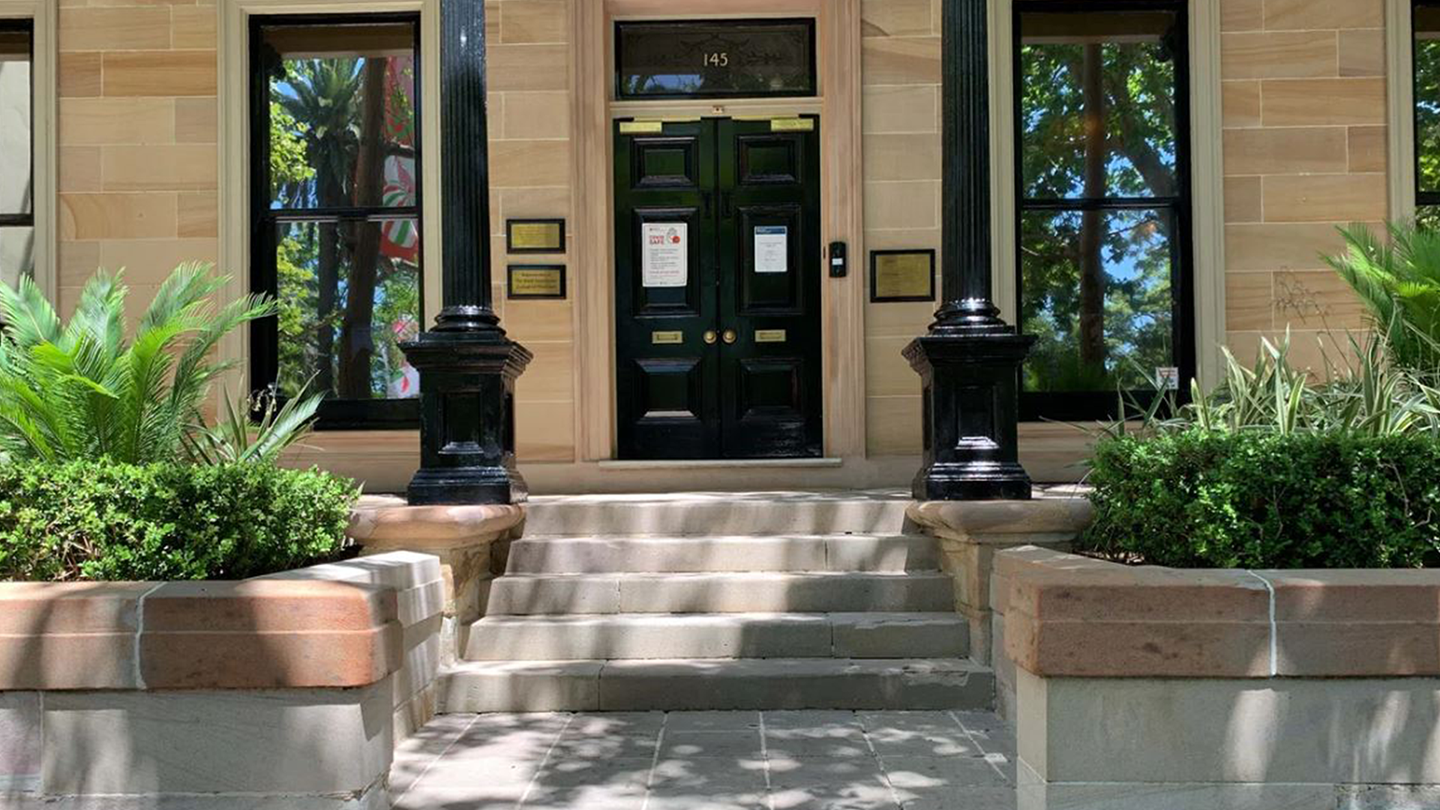
RACP headquarters, Sydney.
Third, the EGM trigger is set so low that we have seen it used as a weapon. The RACP Constitution allows any 100 members to call a full extraordinary general meeting. In an organisation of 32,347, that’s 0.3%. There’s no test of whether the matter reflects broad member concern. There’s no limit on calling another one next week on the same issue. Five meetings in six months. Three on a single day. A million dollars of fee revenue gone. A threshold pegged to a meaningful percentage of the membership (for example 5%), with grounds that have to actually be argued, would have prevented most of this. So would limits on calling repeat meetings on substantially the same matter. Neither exists.
The Numbers Most Members Haven’t Seen
Try these figures on. Of the 32,347 fellows on the books, fewer than one in fourteen (~7%) voted in the 2024 election. The most recent EGM, the one that escalated to police attendance, drew 4,260 votes. That’s 13%. Eighty-seven percent of fellows didn’t engage with a meeting that defines the institution they belong to.
The body that trains and accredits Australia’s and New Zealand’s specialist physicians runs on single-digit turnouts. That’s not democracy. A small, organised group works the constitutional levers, calls the meetings, files the motions, runs the candidates. Everyone else does their busy day job, caring for patients. Institutions don’t get captured by force. They get captured by attendance.
And of course those benefiting from the current arrangements oppose reform. Why wouldn’t they? Accountability is precisely what they’d be giving up. The relevant question isn’t why they resist. It’s why the rest of us let them.
What Comes Next Is on Us
Nothing about the fix is mysterious. The reforms have been written down, signed off and submitted to the federal regulator. They’ve been gathering dust since 2019. Split the president and chair. Build a nominations committee with disclosure rules and conflict checks. Lift the EGM threshold so 0.3% of fellows can’t hold the other 99.7% to ransom. Give the college council the role it should have always had as the genuine voice of members.
But fixing the rules only matters if members turn up to enforce them. Vote in every election. Open the EGM email and read the motion. Push back when you see governance reform watered down or kicked into another working group. Trainees especially have skin in this game. Four thousand dollars a year in fees, mandatory exams, no alternative route to specialist accreditation. They’re paying for a college and they deserve one that works.
The RACP trains our specialists, sets our standards and advocates for community health across Australia and New Zealand. That responsibility demands structures robust enough to ensure leadership reflects the diversity of the membership and the evidence-based principles we all signed up to.
The diagnosis was made in 2019. The treatment plan was written, signed off and shelved. We are now living with the natural history of an untreated condition, and the prognosis is not good unless members decide it should be.