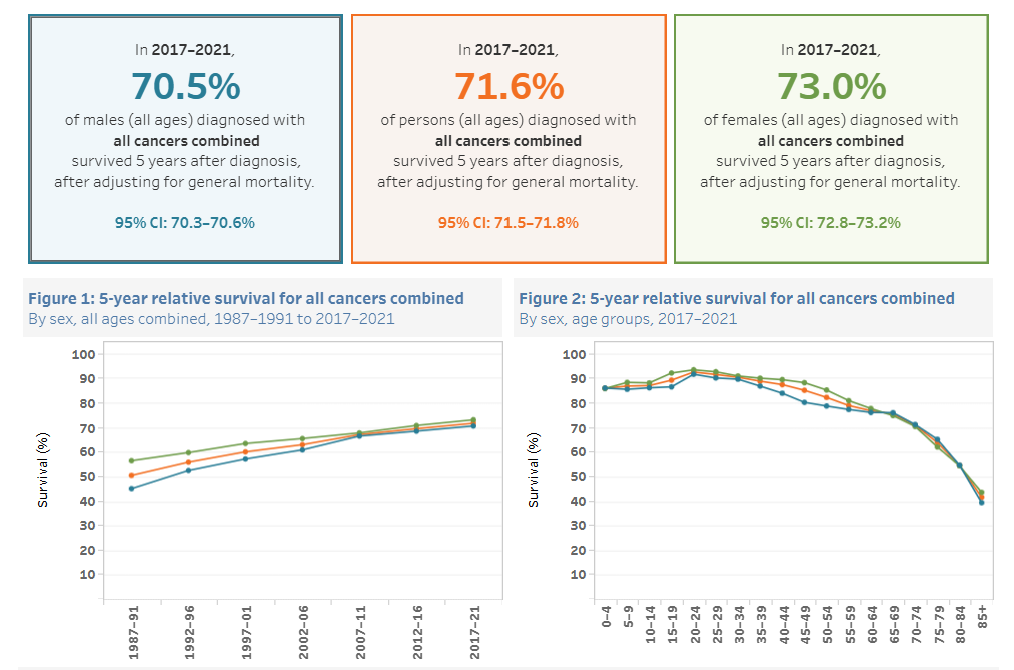
Australia’s five-year cancer survival rate has jumped from 50% to 72% over three decades, but rates are climbing among people in their 30s and 40s, new data show.
The Australian Institute of Health and Welfare’s latest Cancer data in Australia report [link here] reveals age-standardised cancer mortality rates have plummeted from 257 to an estimated 194 deaths per 100,000 people between 2000 and 2025.
“The chances of survival for prostate and breast cancer, the most commonly diagnosed cancer among Australian males and females respectively, have been gradually improving over time,” said AIHW spokesperson Justin Harvey.
Breast cancer five-year survival among females improved from 75% to 93% between 1987–1991 and 2017–2021. For prostate cancer, survival rates increased from 60% to 96% over the same period.
However, the data reveals an concerning pattern in younger Australians. Cancer incidence rates for people aged 30–39 increased from 121 to an estimated 135 cases per 100,000 between 2000 and 2025, driven by higher rates of bowel and thyroid cancer.
For those aged 40–49, estimated cases rose from 280 to 313 per 100,000, driven by breast, prostate, kidney, bowel and thyroid cancers.
“Although nearly 9 in 10 people (88%) diagnosed with cancer are aged 50 or older, cancer incidence rates are increasing among younger age groups,” Mr Harvey said.
“Despite cancer becoming more common for people in their 30s and 40s, cancer mortality rates for these age groups have generally been decreasing.”
An estimated 20,000 cancer cases will be diagnosed in people under 50 in 2025, including around 5,500 cases in people in their 30s and 11,000 in their 40s.
Close to one million Australians have been diagnosed with cancer in the past decade, with an estimated 170,000 new cases in 2025. Cancer accounts for around three of every 10 deaths in Australia.