A five-year-old has become the first person in Australia to receive an infusion of their own umbilical cord blood stem cells to treat cerebral palsy.
Writing in a case report published in the Journal of Paediatrics and Child Health [link here], the team behind the landmark procedure explained the family had privately banked the child’s umbilical cord blood at birth and considered travelling overseas to access treatment.
But following an application from the child’s paediatric neurologist, the TGA granted the child compassionate access to the therapy under the Special Access Scheme (SAS), based on substantial accumulated evidence of the therapy’s safety and preliminary efficacy in helping to repair brain injury and improve motor skills.
While not yet approved as a standard treatment for cerebral palsy anywhere in the world, cord blood is available compassionately overseas, particularly in the US through an FDA-authorised expanded access program costing around US$15000.
In Australia, until now, the treatment has only been accessible within the context of a clinical trial using sibling donor cord blood rather than an autologous infusion. Because of this, Cerebral Palsy Alliance estimated hundreds of Australian families had travelled overseas to access cord blood treatment for cerebral palsy privately.
The case report
Prior to infusion, the child’s cryopreserved cord blood unit was released from the private cord blood bank Cell Care and processed by cell therapies laboratory Hudson Institute Cell Therapy in the Monash Medical Precinct in Melbourne.
After preparation, the cord blood was delivered via drip in the patient’s arm, similarly to a regular blood transfusion. The infusion lasted 30 minutes, during which the child was engaged in play therapy and accompanied by her parents.
She was then monitored for four hours and admitted overnight as a precaution.
Importantly the infusion was well tolerated with no adverse events.
The researchers assessed motor outcomes using the Gross Motor Function Measure-66 (GMFM- 66), finding an improvement of 6.6 points post infusion, which well exceeded the threshold for a moderate clinically meaningful change.
The patient’s greatest improvements were in the standing and walking, and running and jumping test domains, aligning with her treatment goals of reducing falls and increasing participation in sport.
Other assessments and reports from the family indicated that the child had reduced fatigue, improved balance and increased confidence in engaging in play at school. Notably, she improved from six falls to zero while playing ‘tag’.
The researchers hoped the case would serve as a stepping stone towards establishing more research, as well as expanding access options for children with cerebral palsy to receive cord blood in Australia, particularly via the SAS pathway.
“Compassionate access to cell therapies for neurological conditions already exists in Australia; SAS enabled autologous haematopoietic stem cell transplantation is available for select multiple sclerosis patients meeting strict criteria, with outcomes tracked through a national registry that was established in 2011,” they said.
“A similar registry for children with cerebral palsy receiving cord blood treatment via SAS could be established to support international efforts to build the evidence base for this treatment.”
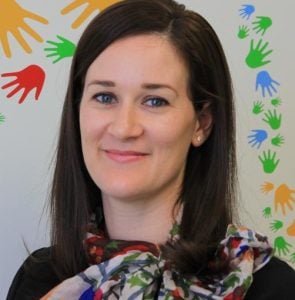
Dr Megan Finch-Edmondson.
Treatment mechanism
Case report author Dr Megan Finch-Edmondson (PhD), senior stem cell research fellow and regeneration program lead at the Cerebral Palsy Alliance Research Institute at the University of Sydney, said there had been decades of research using preclinical models to demonstrate how cord blood could work for a neurological condition.
“We know that cerebral palsy is a result of an injury to the brain while it’s still developing and there is inflammation that persists after the injury. Cord blood is a mixed cell population, so in addition to blood-forming stem cells, there are immune cells and many other types of stem and progenitor cells that can release a number of factors that can help following a brain injury,” Dr Finch-Edmondson said.
“[The treatment works] not through direct replacement of the immune system or the blood-forming system like you see in those haematological conditions, but by helping to modulate the immune system and encouraging the brain to repair itself.”
Practicalities of rolling out the treatment in Australia
Dr Finch-Edmondson said while autologous and sibling cord blood infusions were approved through the SAS pathway – although the latter was yet to be used in this context, donor cord blood from public cord blood banks – a much more accessible resource – was not yet approved for cerebral palsy.
Her team is planning a clinical trial to generate more local evidence around the feasibility of using cord blood units from the public bank in the hope of changing these access barriers. They will also look at treatment efficacy, particularly in combination with high-quality evidence-based rehabilitation post infusion, which remains an evidence gap in the international literature.
The team will also conduct a costing analysis around implementation within the health system, which could help inform the future of the treatment locally.
In terms of resourcing, Dr Finch-Edmondson said there were already three public cord blood banks in Australia that formed the AusCord network, which had an inventory of around 40,000 cord blood units. These units were currently available locally and internationally for blood cancers and other life-threatening blood conditions.
“So there is no shortage of this amazing resource that we could potentially use for cerebral palsy. It’s just a matter of working around the rules and regulations that currently exist to progress access for a condition like cerebral palsy,” she said.
There were also teams with experience and expertise to deliver the treatment, which did not differ too much from other products delivered by infusion, she said.
“I think what’s also a little bit different with this treatment for a condition like cerebral palsy is that you’re bringing together experts across different disciplines. Cerebral palsy being a neurological condition often sits within either paediatric neurology or with rehabilitation specialists and cord blood is an intervention that’s used in haematology,” Dr Finch-Edmondson said.
“So it did take some time to get these different disciplines to come together to make [the treatment of the five-year-old] a reality. But the groundwork that we’ve laid through this case report and through making it happen for this first time does make it easier in the future.”