There are ominous signs that the Trump administration’s border policies could have an impact on international delegate numbers at US medical meetings, with one society urging travelers to seek legal advice and avoid political posts on social media before flying out.
The International Society on Thrombosis and Haemostasis (ISTH) 2025 Congress, to be held in Washington DC in June, has advised people considering traveling to the US for the meeting that Customs and Border Protection (CBP) “screening practices have been enhanced”.
Its Important travel information for ISTH 2025 attendees email includes guidance on planning early, staying up to date with changing travel advisories, and “if necessary, seek[ing] legal advice before you travel.”
In language usually reserved for helicopter parents speaking to their disinterested teenagers, the understated advice includes:
“Be mindful of digital content and social media. In the unlikely event of additional screening, CBP officers may review publicly available content, including social media, to verify visa status or travel intent. Travelers are advised to ensure their online presence aligns with the stated purpose of their visit.
Travel smart with electronic devices. …For added peace of mind, consider traveling with only essential devices and limiting the sensitive personal or professional data stored directly on them. Utilising secure cloud storage or password-protected backups is a smart precaution.
Share your travel plans. Ensure that your family, colleagues and/or employer are informed of your travel details, including your itinerary. If available, have the contact information for your embassy or home institution on hand in case any questions arise during entry into the country.”
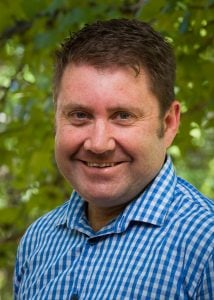
Associate Professor Craig Underhill
Medical oncologist Associate Professor Craig Underhill has made the decision to cancel his plans to attend the American Society of Clinical Oncology (ASCO) Annual Meeting in Chicago from May 30.
He told the limbic that he had booked flights to the US for ASCO 2025 and then to visit some family in New York before Donald Trump was elected to his second presidential term.
“Once Trump was elected, I was thinking about not going as a consumer boycott. I really don’t want to spend money in the US. And then, once these stories emerged of people having their phones checked or being refused entry, it was a very clear decision to cancel that trip.”
“So there’s really two reasons. One, I don’t want to spend any money in the US, and certainly don’t want a holiday there after the conference, and two, I feel nervous about crossing the border, especially when I’ve written articles about inequity.”
Associate Professor Underhill, from the Albury Wodonga Regional Cancer Centre, said he co-hosts the Oncology Journal Club Podcast which recently ran a special on the future of diversity, equity and inclusion in healthcare. [link here]
“I am a strong advocate for improving rural cancer care and overcoming inequity, and I would not shy away from that. So then, why would I put myself at risk – probably at low risk – of trying to enter the US at the moment?” he said.
“Once the reports emerged about multiple people from multiple countries, tourists or people visiting conferences being denied entry, and that might involve 24-48 hours or more in prison, that was a no-brainer to cancel the visit and probably attend the conference virtually.”
“One of the scary things about this whole issue is, it would appear that there’s not an official policy from the US government to deny entry to people who’ve tweeted about Trump. But it’s these low-level border officials who seem to be taking it on themselves to do that. Even Australians with green cards are being denied entry on returning to the US from family events in Australia.”
Associate Professor Underhill said that while the networking at major meetings was really important, the availability of zoom meetings and virtual conference platforms helped offset the loss of in-person attendance.
Virtual conferences were also better for the planet and less costly.
He said his colleagues were certainly mindful of the risks of travelling to the US and while some have made the decision not to go, he was aware of others who may still make the decision to attend.
“I think there’d be a lot of people weighing up what to do. I think people are now looking to go to some of the European society meetings, rather than the American society meetings, where they won’t have that tension or the stress of crossing the US border,” he said.
Associate Professor Underhill said beyond meetings, the consequences of the Trump agenda including significant job and funding cuts to organisations like the FDA, the CDC and the NIH will be widespread and intergenerational.
“There’s good data that almost every oncology drug approved by the FDA has had seed funding from NIH. So if that’s dried up, the consequences for the pharma pipeline globally is quite huge.
He added that funding cuts to the US universities, which had always been able to attract the best and brightest, meant more people were probably wanting to go to Canada or Europe or Australia.
“So it will lead to quite dramatic shifts in patterns of behavior I think. And because it’s a global economy, it will be to the detriment of not just the US, but probably for global development as well.”
“America has really been at the forefront of innovation in medical care and drug development and with the whole tearing apart of the USAID programs there are enormous ramifications for care of people in Africa and Asia and other countries.”
He said he hoped people would keep talking about such injustices as “…we don’t want to be appeasers. We need to be able to speak out and still speak up for important issues.”
I cancelled my trip to American Soc Clinical Oncology meeting (prob the worlds biggest onc conf). As an advocate for rural cancer care and overcoming inequity, why risk crossing the border? @guardian @ASCO @JCOGO_ASCO https://t.co/2DJ2ia5f1X #auspol #DEI #asco #Oncology
— Craig Underhill (@CraigUnderhill) April 15, 2025