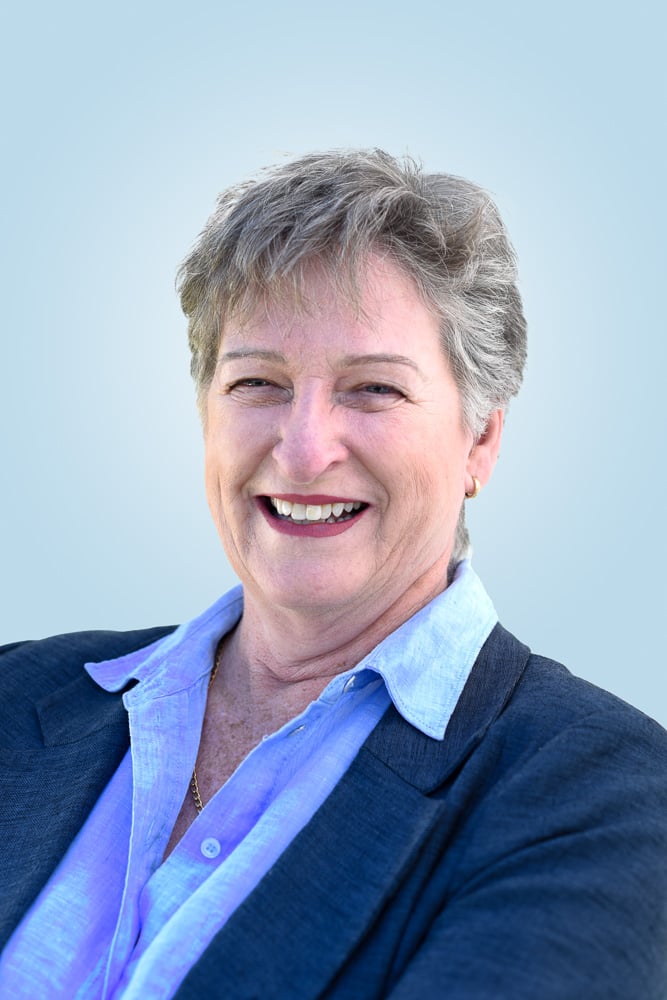
Dr Monique Ryan MP
In May 2022, Dr Monique Ryan MP traded her career as a paediatric neurologist and medical researcher to represent the electoral division of Kooyong, Victoria in the federal parliament.
Four years in and with a second election win behind her, she spoke to the limbic about the skills she has brought to the job, the health and medical issues she has championed, and what’s on the horizon.
She jokes that the ability to work long hours was one obvious transferable skill from medicine to politics but she also admits the capacity to switch from one topic to another quickly is incredibly important.
“On a typical sitting day, I might speak three or four times about very different issues and meet with a whole lot of groups who might be coming to parliament to talk about things as disparate as water in the Murray-Darling Basin, seismic testing in Bass Strait, air quality, or Medicare benefits.”
“One of the things that makes me love the job of being a politician is that I love people. I love hearing people’s stories and I love being able to try and do something to help them as best I can. You can change things on a much bigger level,” she said.
She doesn’t see that she’s left medicine completely behind given she is deputy chair of the Standing Committee on Health, Aged Care and Disability, and that she still sees former colleagues regularly.
“When I’m in Canberra, people come in to talk and advocate for the causes that they care about. When I’m in the electorate, I talk to medical professionals, I talk to med tech, I talk to people who care about science, education and universities. They’re all things I feel really comfortable with because of my life experience and areas that I really want to advocate for.
“It’s very different…but I feel like I’m using my skills in the house. And I have to say, going in as a ‘mature age’ politician, you get a lot more respect than you do if you’re just someone who’s only ever worked as a staffer or for a trade union.”
“So the career as a medical professional, as a medical researcher, and as an academic at Melbourne and Monash universities has really been incredibly helpful in establishing myself as someone who cares about the issues that I used to work on and I still work on, just in a slightly different place.”
Medical research
One of the recent wins she has celebrated was the Federal Budget announcement that the Medical Research Future Fund (MRFF) would distribute more of its funds.
Her Medical Research Matters campaign raised community and political awareness of the MRFF and the “opportunity lost” by not releasing more money.
“There’s a huge number of doctors, medical researchers, scientists, and med tech people in Kooyong, and they raised the issue with me. I hadn’t been aware of the fact that the MRFF was increasing in size but that the spending from it had been frozen for a long time,” she said.
A budget analysis she commissioned [link here] showed lifting the annual disbursements from $650 million to $1 billion was feasible without detriment to the continued growth of the fund.
“Most people care about medical research. It seems a bit esoteric, but when you talk to them about the fact that many people know someone who’s doing a PhD or working in a hospital, everyone cares about the health system. And when you talk about the MRFF…it seemed to most people to be a no-brainer. We’ve put aside the money for this, we’ve said that we’re going to spend this money on this purpose, but we’re not spending it.”
“So it was worth picking it up, and the more we talked about it, the more support we got from industry, from the medical research institutes, from the universities, from academics, and from people who understand that medical research is important not just to our economy but also to our healthcare system.”
She’s also been vocal on reducing the burden of the Higher Education Contribution Scheme (HECS) and on ‘placement poverty’.
“Certainly, on HECS…that was a particular conversation that I had with the mother of four people with massive HECS debts that made me think this is a problem. Three million Australians had increasingly significant HECS debts that they were really struggling with, and it wasn’t just them. It was often their parents and partners and the people around them who cared about it.”
She relayed the conversation to the Education Minister who agreed it was a significant problem. The Albanese government has since capped the indexation rate on HECS and cut 20% off all student loan debts.
On placement poverty, she says it is a complete failure of policy that four out of five students who are undertaking programs like nursing are having to take breaks from their studies because they can’t afford to pay for their prac placements.
“We’ve got a significant national shortage of nurses, but we’re also hearing terrible stories about people going out to country placements who are camping or living in caravans and doing it really tough to complete the training that is mandatory for their studies. It’s a false economy to slow people down when we need the skills that they’re trying to obtain.”
Public health
In other issues, she is contributing to the reframing of gambling as a public health issue.
As outlined in the 2023 Parliamentary report You Win Some, You Lose More [link here], gambling – like tobacco – is addictive and associated with harms.
“Gambling disorders are linked to other health and social issues such as an increased risk of substance abuse and disorders, depressive symptoms and disorders, family breakdown, domestic violence, criminal activity, disruption to or loss of employment, social isolation and homelessness,” the report said.
Like many people, Dr Ryan was disappointed that the government chose not to implement the 31 recommendations of the report which was chaired by one of its own, the late Ms Peta Murphy MP.
Instead, some three years later, the government will introduce into Parliament a watered-down version of the recommendations.
“They had a perfect template that was agreed upon in a remarkably non-partisan way by the parliamentary inquiry into this issue. I hear about this issue most often from parents who come to talk to me about their young people… and ask me for assistance in finding legal support for their school-age kids who have illegally opened accounts and found themselves with very significant amounts of debt,” she said.
“It is a public health issue. There’s no doubt about it and the government really struggles with this framing of it. They can’t fight it, but they really hate it. I want to continue to push because I know that the evidence is behind me, in terms of it being a really significant issue that the government needs to come to grips with and is failing to do so. Not failing to do so; it’s refusing to do so…and that’s incredibly disappointing because they’re not acting in the community’s best interest on this one.”
On climate change, one of the Independent’s key platforms, “a fundamental threat to human health” (WHO), and “health-risk multiplier” (World Bank), she admits it may feel as if the topic has dropped from the forefront of political discourse in recent years.
“And that’s because we’re going through a cost of living crisis…so the challenge for the government and for representatives at a state and federal level is to help people understand how action on climate change is in our economic best interests as well as in our best interests from a health point of view,” she said.
“If we just talk about the current energy crisis, those of us who have been fortunate enough to have access to solar panels, a home battery, and an electric vehicle have found the energy crisis less stressful than those people who don’t. In a cost of living crisis, cost of living pressures are the most important thing for most people, and that’s how we should be talking about the benefit of action on climate change. The challenge is to reframe things to people in the context of what’s important to them at this point in time. That’s certainly what I’ve been doing within my community.”
On the table
Dr Ryan said expanded access to Medicare-funded dental services was another health issue worth championing despite being the cross former Green’s leader Adam Bandt sacrificed his political career on last year.
“The Greens often take a more radical position than I feel comfortable with, but I’m also very conscious of the fact we have to pay for things. Fully funded dental care would be fantastic, but we can’t achieve that straight away. Quite apart from anything else, we don’t have the workforce that we could roll out to take that on,” she said.
“I think my position of comfort is being practical and working on things in a way that’s evidence-based. Perhaps aiming for the stars, but understanding that we might just get the moon.”
She’s also keen to push for an inquiry into access to specialist healthcare.
“People can’t access private maternity care in Tasmania. People in some rural and regional centres are waiting years to see a specialist in outpatient clinics. People are being forced to go into the private system, but … the out-of-pocket costs are increasing at a rate well beyond inflation, and at the same time, specialists are telling us that they’re really struggling to set up and pay for their private practices,” she said.
“I don’t think it’s reasonable that in 2026 people can be forced to wait 12 months or more for a paediatric appointment in Melbourne and Sydney. There’s a whole lot of different issues with that – there’s workforce strategies, there’s training positions, there’s funding of Medicare, and of public and private hospitals – that I think the inquiry should look at. At the end of the day, we just want to make it easier and more affordable for people to get specialist medical care when they need it.”
“They’re things that I can speak about, because I have an understanding of the system and a knowledge of what works, what doesn’t, and what’s actually important to people.”
She said choosing which issues to prioritise was a complex algorithm of what her community was concerned about, its importance, and what can be done about it.
“If there’s an ask that is achievable, and which would be meaningful if we were successful with it, and that the community would then see that as impactful…my team and I should try to do that as best we can. The contract that we have with our community is that we will listen to them and be responsive to them. We can’t always give them everything that they want, but if we can’t, then we’ll explain why that is.”
“I think what I’ve managed to do is to create a community-based representation that certainly the electorate I live in hasn’t experienced before.”