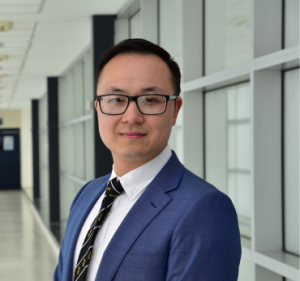
Associate Professor David Liu
Pathological response to neoadjuvant FLOT can be used to tailor further treatment and reduce the rates of both under- and overtreatment in patients with locally advanced gastro-oesophageal adenocarcinoma.
An international study of 1,887 patients from 43 hospitals in 12 countries including Australia found only patients with a partial response to neoadjuvant 5-fluorouracil, leucovorin, oxaliplatin, and docetaxel (FLOT) derived any benefit from adjuvant FLOT.
The SPACE-FLOT study, published in the British Journal of Surgery [link here], suggested minimal and complete responders would gain no benefit from additional cycles of FLOT but would be at risk of further toxicity.
The study used tumour regression grading (TRG) on the resected specimen to allocate the patients to minimal responders (worst TRG tier – 24.3%), complete responders (pCR – 11.7%), and partial responders (all TRG tiers in-between – 64.0%).
Most patients (82.9%) had received all four neoadjuvant FLOT cycles with toxicity the most common reason for early cessation of therapy.
In the minimal responder group, 59.3% of patients received FLOT after surgery and most (79.0%) completed all four adjuvant cycles.
The study found the 2-year DFS for patients who did and did not receive adjuvant FLOT was 55.2% and 55.6% respectively (HR 1.03 (95% CI 0.78 to 1.36), P = 0.836).
While there was a difference in unadjusted OS between the two groups this became non-significant after adjusting for different characteristics between the groups such as Charlson co-morbidity index and ECOG status.
“This demonstrates that adjuvant FLOT does not improve DFS and OS in patients with a minimal response to neoadjuvant FLOT,” the study said.
There were similar findings in complete responders to neoadjuvant FLOT – of whom 61.5% also received adjuvant FLOT.
The 2-year DFS for patients who did and did not receive adjuvant FLOT was 87.9% and 86.2% respectively (HR 0.88 (95% CI 0.41 to 1.85), P = 0.724).
“Similarly, OS was comparable between these two groups based on unadjusted (HR 0.69 (95% CI 0.31 to 1.54), P = 0.343), Cox regression adjusted (HR 0.69 (95% CI 0.29 to 1.68), P = 0.417), and propensity score matched (HR 0.97 (95% CI 0.44 to 2.14), P = 0.940) analysis.”
However, of the partial responders to neoadjuvant FLOT, the 70.2% who received FLOT after surgery received a significant benefit.
The 2-year DFS for patients who did and did not receive adjuvant FLOT was 74.5% and 61.9% respectively (HR 0.68 (95% CI. 0.55 to 0.86), P < 0.001).
“Moreover, adjuvant FLOT significantly increased OS based on unadjusted (HR 0.55 (95% CI 0.44 to 0.69), P < 0.001), Cox regression adjusted (HR 0.63 (95% CI 0.50 to 0.79), P < 0.001), and propensity score matched (HR 0.66 (95% CI 0.54 to 0.82), P < 0.001) analysis,” the study said.
“Compared with the adjuvant FLOT group, patients who did not receive adjuvant treatment had a significantly higher risk of peritoneal, nodal, bone, central nervous system, and chest wall recurrence.”
The investigators, including Associate Professor David Liu from the Austin Hospital and Peter MacCallum Cancer Centre in Melbourne, said their findings can be used to personalise the perioperative management of patients with resected gastro-oesophageal adenocarcinoma.
Reducing unnecessary exposure to perioperative FLOT was important to reduce the risk of acute toxicities but also permanent toxicities such as peripheral neuropathy that can limit future therapeutic options.
Associate Professor Liu told the limbic that the four cycles of FLOT after surgery is often very difficult for patients to tolerate.
He said patients have a 1.6% risk of dying from the toxicities of the chemotherapy compared to about a 1% risk of dying from significant surgeries such as gastrectomy and oesophagectomy.
“It’s really tough because the body’s recovering from four cycles of neoadjuvant chemo and massive surgery. A lot of patients have lost 20-30 kilos and they find they can’t really eat properly. And so most of them get a lot of toxicity from the post-surgery cycles.”
“We’ve got the information now to say, well this is actually what you’re looking at potentially gaining or not gaining. Do you actually want this? It enables that conversation.”
He said in patients with a partial response to the neoadjuvant treatment, there was no decision other than they should continue with the adjuvant FLOT.
“If a patient has not got a response at all, then the decision is a bit more nuanced now. It isn’t just giving more [chemo] and let’s just hope for the best. The decision now is based on how fit the patient is and how well the patient has come out of surgery. If the patient has come out from surgery and has had a complication, we won’t push chemo because we know that, even if there is any benefit, it’s not great.”
He said for patients who have sailed through surgery, had a really good response, with no tumor left in the resection specimen, there was also now evidence to support skipping adjuvant treatment.
“And we feel quite comfortable doing that now. However, if the patient is really keen, they want absolutely everything we can give… that’s fine, because that’s what we used to do anyway. And similarly, for those who’ve not responded at all, we would say look this is the data. The chances are you’re not going to get a lot of benefit but if you want it, okay.”
Associate Professor Liu said the study has been presented at both the International Society for Diseases for the Esophagus (ISDE) and ESMO Congresses.
He said whether clinicians felt comfortable accepting the study’s findings depended partly on specialty and institutional culture.
“I practice at the Austin and I practice at the Peter MacCallum Cancer Center…. we’ve changed practice. Philosophically, it is crazy to basically apply the same type of treatment for every patient regardless,” he said.
“We’re saying how important and how wonderful it is to personalise medicine. But on the other hand, since 2017 for almost a decade now, we’ve accepted that we just give the same treatment to everyone regardless. This trial makes a big difference…we’ve got data to support our decision making.”
Associate Professor Liu said a RCT was impractical and unlikely. As well, the treatment landscape was changing and the GI cancer community were now awaiting the results of the MATTERHORN RCT of FLOT with and without immunotherapy [link here].