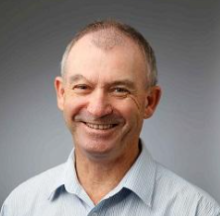
 In a career spanning decades and marked by significant contributions to both medicine and public service, the Honourable Dr Kim Hames’s recognition as a Member of the Order of Australia (AM) for significant service to the Parliament of Western Australia, to medicine, and to the community feels both fitting and overdue. The former Deputy Premier of Western Australia and long-serving general practitioner has spent his life navigating two challenging yet deeply interconnected worlds: healthcare and politics.
The celebrated doctor admits his entry into politics wasn’t exactly planned. “I started out in local government. At the time, I was a GP with no interest in politics whatsoever,” he says. “I had a dispute with the council, and the Mayor at the time suggested I run for local government. So, I did. I got elected and spent eight years there. I really enjoyed it and that experience sparked my interest in pursuing politics at a higher level.”
His entry into parliament came in 1993 when he was elected to the Western Australian Legislative Assembly as the Member for Dianella. Over the years, he held various portfolios including health, tourism and water before serving as Deputy Premier from 2008 to 2016. His tenure in public office was defined by his ability to bridge the gap between policy and practice, a skill undoubtedly honed during his years in medicine.
“Being a GP is about helping people, listening to them, working out what they need. It’s great preparation for parliament,” Dr Hames reflects. “It teaches you teamwork and how to get things done. When I became Minister for Health, that background was invaluable. My medical knowledge and the networks I’d built made a massive difference.”
Dr Hames, who served seven years as Western Australia’s Health Minister, believes his tenure set a benchmark. “Most people don’t last that long because it’s a tough portfolio, but we achieved a lot in that time.”
On tough decisions:
Dr Hames recalls the challenge of being the first Health Minister to ban CSLs Fluvax, which triggered febrile seizures in some young children who received its 2010 trivalent vaccine.
“I was driving home when I heard about a young girl at Princess Margaret Hospital suffering severe complications – febrile convulsions – after receiving the CSL flu vaccine. I got home, organised an interview with Channel 7 and announced the ban that same night. We were the first state to do it and within a week the rest of Australia followed. Making a call like that when no one else is doing it is a big decision.”
Dr Hames describes his determination to lead WA’s health system as a driving force in his political career. “When we lost power in 2001 I still carried a burning passion to become Health Minister. That’s why I fought to get back into government, even though it meant uprooting my life. I had to move away from my family in Perth and live in a different electorate – it was a tough time.”
Reflecting on the toll his political career took on his family, Dr Hames acknowledges his wife who managed the demands of raising six children, one of whom has a disability, while he worked away from home.
Together, their perseverance paid off when he returned to government. “I spent four years in opposition but, once we were back in power, I became Deputy Premier under Colin Barnett. As Deputy Premier you get to choose your portfolio and for me it was always going to be health and Aboriginal affairs.”
Dr Hames acknowledges his knack for securing funding for WA’s health system. “The WA Treasurer at the time once said that if there was a dollar not nailed down, I’d find a way to get it – and that’s probably true,” he says. During his seven years as Health Minister, the budget increased from $4.5 billion to $8 billion to meet growing community needs.
He highlights the introduction of the “four-hour rule,” a policy aimed at reducing emergency department wait times. “We initiated it here in WA and it later went national. Before I came into government, there was a constant narrative of a health system in crisis – headlines every week. During my time as minister, that disappeared. The four-hour rule bought the system six or seven years of coping with demand, though it’s less effective now than when it was first implemented.”
On proudest achievements:
As Minister for Water, Housing, and Aboriginal Affairs, Dr Hames laid the groundwork for Western Australia’s first desalination plant. “We didn’t build it – the Labor government did – but we had the plans ready to go to cabinet,” he says. He also championed wastewater recycling and a swimming pool program in remote Aboriginal communities. “We were able to get that program off the ground because I had the understanding to carry out before and after research in Aboriginal children’s health outcomes as a result of the program. We saw big improvements in ear and skin infections among Aboriginal children involved in the pilot study. It’s been 20 years, and the Royal Life Saving Society is still managing those pools, which makes me proud.”
Building hospitals stands out among Dr Hames’ achievements in health. “The Fiona Stanley Hospital, the Children’s Hospital, Midland Public Hospital and Karratha – all were planned, budgeted, and funded under my watch. Of course, governments change, and the next one gets the credit, but we did the heavy lifting,” he says with a laugh.
Dr Hames also spearheaded a renewal program for rural hospitals, funded through the Royalties for Regions program. “Those investments made a real difference to regional communities, and they remain some of the work I’m most proud of.”
On being appointed a Member of the Order of Australia Dr Hames acknowledges that while such honours are not the goal, they are deeply rewarding when others see the impact of your work.
“It’s a great honour, it’s not something that you work towards but it’s very rewarding when people recognise what you’ve done”.