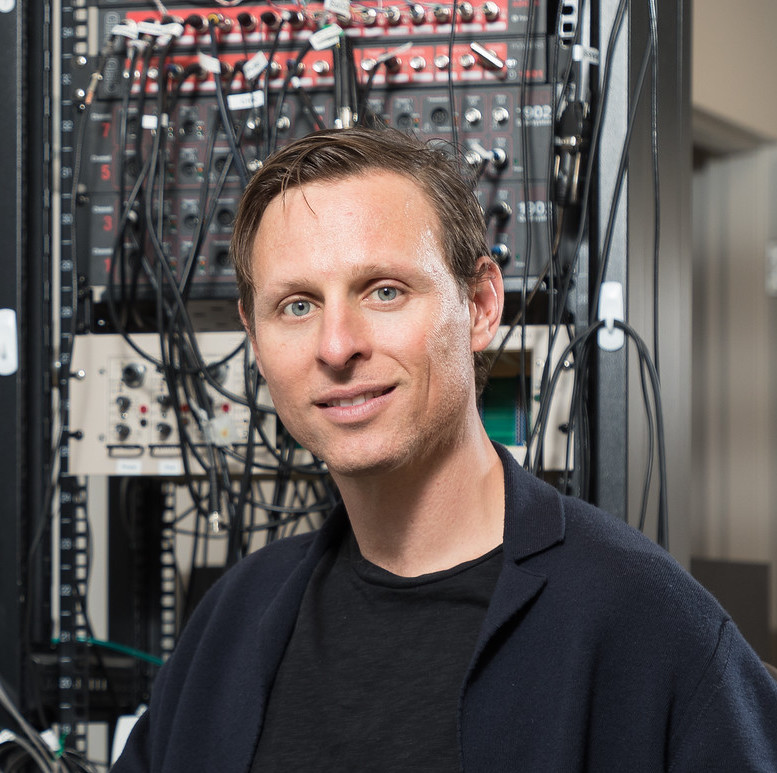
Professor Danny Eckert
Professor Danny Eckert has been announced as the recipient of the European Respiratory Society (ERS) Mid-Career Gold Medal in Sleep Disordered Breathing.
The Gold Medal honours a researcher with an excellent track record and the potential for further outstanding developments within the field of sleep disordered breathing.
It will be presented at the ERS International Congress 2023 which is being held in Milan 9-13 September.
Professor Eckert, Director of the Adelaide Institute for Sleep Health at Flinders University, told the limbic that sleep was one of the three pillars of health – “up there with exercise and diet”.
“In the last 20 or 25 years that I’ve been involved in the field, our knowledge and our awareness has exponentially increased about how important sleep is,” he said.
Professor Eckert said obstructive sleep apnoea used to be believed to be largely an anatomically driven disorder with all the therapies at the time directed at trying to fix the problem with CPAP, mouthguards or surgery.
“In my mind, I’m most well known for figuring out that, yes anatomy is indeed important, but there’s these three other non-anatomical causes of sleep apnea. And it turns out that 70% of people with sleep apnoea have one or more issues with those other three causes.”
Precision medicine for OSA
He says his landmark paper ‘Defining Phenotypic Causes of Obstructive Sleep Apnea. Identification of Novel Therapeutic Targets’, published in the AJRCCM in 2013 [link here], laid the foundation for his career “and hopefully many other people’s careers”.
“What that’s done is unlocked a whole new framework to understand the pathophysiology but also to then target each one therapeutically. So it’s opened up new avenues therapy, including pharmacotherapy as well as combination therapy where you target more than one of those mechanisms.”
“Endophenotyping, really precision medicine for obstructive sleep apnea, has been my major contribution to the field.”
“Now we are very much focused on what that will be for the different causes of OSA and pursuing each and every one of them with new therapeutic targets and new diagnostic tools.”
“We’ve now built machine learning and more clinically relevant decision tools that will help identify these four traits easily from information we already get. So that’s been really exciting.”
“On the therapeutic front, we are now in a place where we’ve got several pharmacotherapy targets that are at various stages of development. So within the next five to 10 years … I genuinely think that we are within that timeframe of having the first drug therapy to treat sleep apnea,” he said.
“We’re also working with industry partners looking at nerve stimulation techniques, and we’re doing some surgery studies at the moment. There’s a whole lot of work going on in terms of home monitoring and new technology to be able to monitor and diagnose in the home which is exciting too.”
Professor Eckert leads a comprehensive translational team of over 60 multidisciplinary researchers which he says is essential for understanding sleep disorders and developing new treatments for patients.
“You can’t figure it all out unless you’re involving experts from other disciplines. That is absolutely a massive strength of what we do and I would say more so in this field than others because impaired, inadequate or disrupted sleep due to a sleep disorder literally adversely affects every organ in the body and potentially every cell. By nature, it has to be multidisciplinary.”
Professor Eckert said the Federal Health MInister Mark Butler has recently responded to the report of the Parliamentary Inquiry into Sleep Health Awareness which was tabled in 2019 [link here].
He said he hoped this would generate a lot more awareness and action on sleep disorders and their management.
Meanwhile, he is also taking the message about sleep and sleep health direct to consumers via a TV series hosted by Dr Michael Mosley. The program will air on SBS next year.