
Two surgeons can work in the same department yet come away with completely different views of sexual misconduct in their workplace. UK researchers think they know why.
A qualitative study has proposed a new explanation for why clinicians can perceive the same surgical workplace so differently, suggesting awareness of sexual misconduct depends not only on what people experience, but where they stand within the organisation and what they are able to see. The findings help explain how misconduct can remain hidden from some clinicians while being impossible to ignore for others.
Published in the British Journal of Surgery [link here], the research analysed 742 free-text responses from surgeons, trainees and medical students who participated in a nationwide survey of the UK surgical workforce. The responses formed the basis of what the authors call the “Lateral View X-ray” theory, a metaphor designed to explain how sexual misconduct can be “simultaneously pervasive and invisible” within surgery.
The study builds on the authors’ landmark 2023 survey – the largest UK study of sexual misconduct in surgery – which found women surgeons were almost three times as likely as men to report sexual assault during their careers (29.9% versus 6.9%) and more than twice as likely to report sexual harassment (63.3% versus 23.7%). Women were also substantially more likely to report witnessing sexual harassment (89.5% versus 81%) and sexual assault (35.9% versus 17.1%) in the workplace.
Those findings established the scale of the problem. What they did not explain was why clinicians working in the same departments often described such markedly different workplace realities.
Some participants described workplaces where sexual misconduct appeared uncommon. Others recounted informal “whisper networks” warning trainees which colleagues to avoid and environments where inappropriate behaviour was well recognised among junior staff. That knowledge did not necessarily travel up workplace hierarchies, leaving many senior clinicians insulated from behaviours occurring lower in the organisation.
The same workplace, the researchers suggest, may appear “intact from one angle yet broken from another”, depending on where a clinician stands within it.
“We felt that the numbers were simply so high that this couldn’t be isolated departments that were affected,” lead author Dr Rebecca Fisher, from the University of Manchester’s Health Workforce Research Group, told the limbic.
“These viewpoints must coexist.”
Rather than asking whether one group was right and the other wrong, the researchers set out to understand how both perspectives could be true at the same time.
A theory of perspective
The answer they propose is that awareness depends on vantage point.
Clinicians acquire knowledge of workplace culture through different experiences, relationships and positions within the organisation, meaning no individual perspective can capture the whole picture, explains Dr Fisher.
Drawing on the familiar practice of reviewing both anteroposterior and lateral X-rays, the authors suggest clinicians should think about workplace culture in much the same way. Just as a fracture can be missed if only one view is examined, important aspects of workplace culture may remain hidden when seen from a single perspective.
The model describes two broad viewpoints. The “AP View” reflects clinicians whose experiences lead them to perceive little or no sexual misconduct, while the “Lateral View” reflects those whose understanding has been shaped by personal experience, witnessing misconduct or informal workplace networks.
The authors stress these are not fixed categories, but points along a continuum of awareness intended to encourage reflection on the limits of one’s own perspective.
“As in clinical practice, seeking the lateral view is essential to make the hidden visible,” investigators wrote.
“Practising this is essential for those at lower risk of witnessing misconduct, such as men and senior staff,” they added.
The researchers also argue that awareness is shaped by the language available to describe an experience.
Before the 1970s, the term “sexual harassment” had not yet entered common use, making it difficult for victims to name or communicate what had happened to them.
More recently, they suggest movements such as #MeToo have provided the language and social legitimacy for people to reframe ambiguous experiences as harassment.
“Thus a shift from the AP View to the Lateral View. Until all healthcare workers understand the social factors enabling misconduct, many may however remain in the AP View – not out of denial, but because they cannot interpret events as misconduct,” the authors noted.
For Dr Fisher, understanding that apparent contradiction became the central challenge of the research.
“I spent an awfully long time thinking about how two groups could be perceiving something differently,” she said.
After initially exploring trauma-informed theory, she realised surgeons already relied on a familiar principle: never interpret an X-ray from a single perspective.
The analogy became personal after she recalled overlooking a lateral X-ray as a medical student.
“It resonated with me because I’ve definitely been in a situation as a student where I forgot to check the lateral view and felt very foolish, and then changed my practice because of it.”
The researchers deliberately describe the model as a “no-blame” approach, arguing that different experiences can produce different – but equally genuine – understandings of the same workplace.
“It’s really important that things are framed in a no-blame way because we need to respect that the majority of people involved in these situations are not perpetrators,” Dr Fisher said.
“Most people in medicine do believe they are doing good in the world, so it can be very confronting and jarring to be told you are causing harm.”
She said one of the model’s strengths was recognising that clinicians were not fixed within either perspective.
“I think it’s a real strength of this model, as it respects that we can move between viewpoints throughout our lives, and what we are seeing is valid but may not be the whole picture.”
The authors suggest the framework could be incorporated into surgical education to broaden clinicians’ perspectives, strengthen reflective practice and improve responses to reports of misconduct.
“If this kind of training worked, I’d hope that senior leaders receiving complaints and reports would be more open minded that there may be problems in their department that they’re insulated from,” Dr Fisher said.
“At the moment it can be tempting to dismiss a victim because you don’t share their viewpoint. This model challenges that.”
Beyond the metaphor
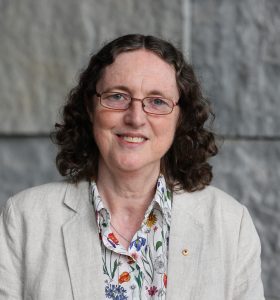
Dr Margaret Kay
For Australian medical educator Dr Margaret Kay, Associate Professor at the University of Queensland’s Medical School and Chair of the Doctors’ Health Alliance, who was not involved in the study, the paper marks an important shift in where medicine is beginning to look for answers.
Rather than focusing solely on individual behaviour, she said it asks clinicians to consider how workplace culture, hierarchy and personal experience shape what they notice – and what they overlook.
While she questioned whether the study’s qualitative analysis had yet developed sufficient depth to support a new theoretical framework, she said encouraging doctors to examine the limits of their own perspective was an important step.
“This is a perfect time for doctors to be learning that our perspective matters,” she told the limbic.
“Standing in another’s shoes can help us make sense of their reaction to things. We need to do this to be a good doctor for our patients.”
She said the underlying concept would be familiar to disciplines such as sociology, where perspective has long been recognised as central to understanding human behaviour.
Medicine, by contrast, has traditionally prioritised biomedical knowledge over understanding the social and cultural forces that shape how clinicians perceive patients, colleagues and workplace culture.
Those perspectives, she said, are gradually acquired through professional enculturation and reinforced by the profession’s hidden curriculum – the informal lessons absorbed through hierarchy, observation and everyday practice.
“We learn to ‘not see’, we learn to ‘excuse’, we learn to ‘accept’,” she said.
“Our cultural background, our family background, how we were trained and enculturated into medicine, our own experiences, our peers’ experiences and our understanding of human nature all shape how we see things.”
That complexity, she said, is why educational initiatives are expanding beyond helping doctors recognise inappropriate behaviour to also exploring the wider systems that shape workplace culture.
She pointed to the Doctors’ Health Alliance curriculum and Better Culture Framework as Australian initiatives that encourage clinicians and health services to look beyond individual behaviours and examine the organisational and cultural influences shaping workplace culture.
“When we developed the Doctors’ Health Alliance curriculum, we deliberately framed doctors’ health as something complex,” she said.
“We wanted to give doctors a framework to help conceptualise these many intersecting issues and enhance their capacity to navigate them – as individuals, when supporting peers and from an organisational perspective.”
Recognising different perspectives, she said, was only the beginning.
Health services also needed to understand how organisational culture and systems reinforced behaviours that staff gradually came to accept as normal.
“We need to understand how health organisations embed the poor behaviours and how they can enhance the better behaviours,” she said.
“The reality is that if we were to address these issues,” she said, “the health system would work better and be cheaper while delivering more patient-centred care.”