Leading figures in Australian dermatology have been recognised in this year’s King’s Birthday Honours, acknowledging careers that have helped reshape skin cancer diagnosis, expand specialist care for women and train generations of dermatologists.
Professor H. Peter Soyer was appointed an Officer of the Order of Australia (AO), while Associate Professor Anne Howard and Dr Tanja Bohl were each appointed Members of the Order of Australia (AM). South Australian dermatologist Dr Lachlan Warren received a Medal of the Order of Australia (OAM).
the limbic spoke with some of the recipients about the careers that brought them to this moment and the enduring appeal of a specialty they say continues to evolve.
Professor H. Peter Soyer AO
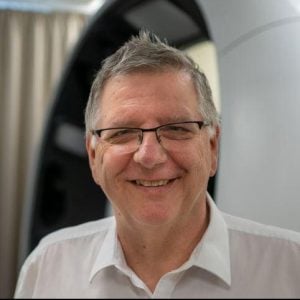
Professor H. Peter Soyer
Ask Professor Soyer what has driven a career spanning dermoscopy, melanoma imaging and some of the most significant advances in skin cancer diagnosis over the past four decades, and his answer is disarmingly simple.
“Curiosity.”
The trait has carried the Austrian-born dermatologist from a university hospital in Graz to the forefront of Australian skin cancer research, a contribution recognised this King’s Birthday with appointment as an Officer of the Order of Australia.
Professor Soyer said the honour was particularly meaningful because it recognised work that had always been deeply collaborative.
“I was obviously very, very surprised because it felt very humbling,” he told the limbic.
When Professor Soyer arrived in Brisbane nearly two decades ago, he was already one of Europe’s most established dermatologists.
A professor at Austria’s Medical University of Graz, he held a senior tenured position and an internationally recognised research profile.
Yet, at the age of 53, the prospect of helping shape a new chapter for Australian dermatology proved difficult to resist.
The opportunity was the newly created position of inaugural Chair of Dermatology at the University of Queensland.
What drew him to Brisbane, he says, was the chance to build a dermatology research program capable of competing with the country’s best.
At the time, Professor Soyer said Queensland’s dermatology research community was not always viewed in the same league as some of the major centres in Victoria and New South Wales.
“I always felt it was my responsibility and my goal to help build one of the leading dermatology research groups in Australia,” he said.
Over the next two decades, he helped transform Queensland into a major centre for dermatology and skin cancer research, establishing international collaborations and contributing to pioneering innovations that changed how clinicians detect and monitor skin cancer.
He is quick to emphasise that the achievement was a collective one.
“Of course, that’s not just me,” he said. “There are many colleagues involved and we now have a fantastic team.”
Much of that success, he believes, stems from Australia’s collaborative research culture.
“Here in Australia we work together, across disciplines, with epidemiologists, statisticians, data scientists, computer scientists and engineers. I think that’s been one of the keys to our success. We don’t stay in our own silo.”
For Professor Soyer, that multidisciplinary approach has been central to many of the advances that have transformed skin cancer diagnosis over the past two decades.
Through pioneering work in dermoscopy, melanoma imaging and digital dermatology, Professor Soyer helped transform the early detection of skin cancer and establish new standards of care adopted internationally.
In 2003 he helped establish the International Dermoscopy Society, which grew alongside the emergence of dermoscopy itself. Once viewed with scepticism by some clinicians, the technique is now considered a cornerstone of modern melanoma assessment, helping doctors identify suspicious lesions with greater accuracy and confidence.
Although many of the biggest advances in melanoma over recent years have come from treatment, Professor Soyer sees his own contribution differently.
“I would describe myself primarily as someone working in preventive dermatology and early detection,” he said.
“A great deal of innovation is happening now on the treatment side. The advances have been remarkable, particularly with immune checkpoint inhibitors and targeted therapies. My domain is early detection and prevention.”
That focus on prevention has led Professor Soyer to concentrate on what he sees as the two major challenges facing melanoma diagnosis. The first is overdiagnosis.
Professor Soyer said increasingly sensitive diagnostic technologies are helping clinicians identify very early lesions, but also raising difficult questions about whether every lesion being detected represents disease that would ever cause harm.
“We are probably detecting too many very early melanomas – and perhaps some lesions that are not truly melanomas at all,” he said.
People diagnosed with melanoma inevitably begin to view themselves as cancer patients, he noted, even when the biological significance of some lesions remains uncertain.
“That can create significant psychological consequences. The challenge is not simply finding more disease. The challenge is finding the disease that matters.”
The second challenge is inequity.
Professor Soyer said many Australians still faced significant barriers to specialist skin cancer care, particularly those from disadvantaged socioeconomic backgrounds.
“There are people who do not have the financial resources, and often not the opportunity, to see a skin cancer doctor or dermatologist,” he said.
“Those are the people who frequently present with thick, advanced melanomas.”
The gap, he believes, is driven by a combination of health literacy and socioeconomic disadvantage.
People from higher socioeconomic groups were generally more likely to undergo regular skin checks and seek medical attention early, while others at equal – or sometimes greater – risk often did not.
“The question is how we reach them,” he said. “This is very important to me. It’s is an area where we are still struggling.”
One promising approach may be targeted population screening.
Professor Soyer pointed to growing interest in risk-based screening programs and new technologies such as total-body imaging systems.
Artificial intelligence may also help address some of these challenges, although only if it improves access rather than widening existing disparities.
“But of course we have to ensure that it improves equity of access,” he said. “That is not an easy task given the geography of Australia.”
The same access issues extend beyond melanoma, he added.
People living with inflammatory skin diseases often face many of the same barriers to specialist care and, as a result, may miss out on highly effective treatments.
“The issue of inequity is something our group is very interested in,” Professor Soyer said.
One long-term vision is the development of a “digital skin hospital” where imaging can be performed anywhere in Australia and reviewed remotely by specialist teams.
Another area that continues to fascinate him is dermatopathology, where emerging technologies are allowing researchers to revisit questions that have lingered unanswered for decades.
Having trained extensively in dermatopathology early in his career, Professor Soyer said advances such as spatial transcriptomics were opening entirely new windows into disease biology.
“We are finally beginning to answer questions that we first asked 20 or 30 years ago but simply didn’t have the tools to investigate,” he said.
“The technological and molecular advances happening now are allowing us to revisit conventional pathology with entirely new insights.”
For Professor Soyer, the implications for precision diagnosis and precision medicine are enormous.
“And that still excites me enormously,” he said.”It’s one of the reasons I am still working.”
There will be a time for retirement, of course,” he said. “But not yet. These are exciting times.”
Associate Professor Anne Howard AM
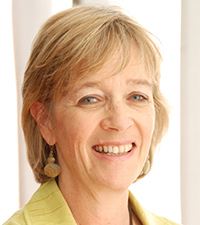
Associate Professor Anne Howard
Growing up, Associate Professor Howard assumed she would follow a path familiar to many young women of her generation and become a teacher. Instead, it was a teacher who encouraged her to consider medicine – a conversation that ultimately led to a career spanning almost every facet of Australian dermatology.
This King’s Birthday, Professor Howard was appointed a Member of the Order of Australia for significant service to dermatology as a clinician, teacher, examiner and mentor.
Over the next four decades she would care for patients across Melbourne’s major teaching hospitals, establish pioneering clinics for women with complex dermatological conditions, become the first female president of the Australasian College of Dermatologists and help train generations of specialists.
After training in physician medicine, Professor Howard found her way into dermatology through the encouragement of Melbourne dermatologist Dr James Butler.
The specialty appealed because of its variety, diagnostic challenge and the opportunity to care for patients across every stage of life, she told the limbic.
Professor Howard went on to build a career spanning the Royal Melbourne Hospital, Royal Children’s Hospital and Royal Women’s Hospital, while helping establish dermatology services in Melbourne’s western suburbs at a time when specialist access was limited.
“There weren’t really any other dermatologists out there at the time,” she said.
Among her most enduring contributions were the establishment of the Vulval and Pregnancy Dermatoses Clinic at the Royal Women’s Hospital and the Nail Clinic at Melbourne’s Skin Health Institute.
Both clinics emerged from a recognition that patients with these conditions often had few dedicated services available.
The vulval clinic evolved into a multidisciplinary service bringing together dermatologists, gynaecologists, physiotherapists and sexual health clinicians, while the nail clinic became a hub for specialist education and training.
In 2005 she became the first female president of the Australasian College of Dermatologists, a milestone that reflected the changing face of the specialty and a career-long commitment to education and leadership.
She followed Dr James Butler into the role and led the College during a period of significant governance reform and ongoing advocacy for additional specialist training positions.
One of the major issues facing the College at the time was securing funding for more accredited training positions.
“A lot of people think the colleges are deliberately limiting numbers, but that’s really not the case,” Professor Howard said.
“We’re always trying to advocate for more training positions.”
Looking back, she says the experience gave her a deep appreciation for the many dermatologists who volunteer their time to support the profession.
“Everybody wants the best for dermatology and the best outcomes for patients.”
Professor Howard entered dermatology at a time when female leaders were still uncommon. Over the following decades she helped mentor and train a new generation of women dermatologists and played an important role in expanding female leadership within the profession.
“When you’re a female dermatologist, there’s no doubt you end up seeing women’s problems,” she said, reflecting on the demand for female clinicians in areas such as vulval disease and pregnancy-related skin conditions. She said expanding that workforce was as important as establishing the services themselves.
Her commitment to education extended well beyond Australia.
Over the years Professor Howard volunteered in Fiji, Nauru, Tanzania, Uganda and remote Indigenous communities across Australia, experiences she says taught her as much as she taught others.
“I’ve always thought that, being so lucky in my career and so happy in what I’ve done, I should give something back,” she said.
The belief was shaped early in life by her father, a church minister, and her mother, a social worker.
“It’s always been something in our family that we’ve felt strongly about – that you should give back to society.”
Yet she is reluctant to portray the work as a sacrifice.
“I still often feel that I get more out of it than I put into it,” she said.
The experience exposed her to diseases, healthcare systems and challenges rarely encountered in Australia, while reinforcing the importance of local leadership.
“I feel very strongly about helping First Nations people and increasingly we’re training more Aboriginal doctors and Aboriginal dermatologists – they want to care for their own communities,” she said.
Working alongside dermatology trainees in Africa proved equally rewarding.
“They taught you such a lot,” she said. “Working with darker skin, you see conditions presenting in ways that you don’t necessarily see in Australia.”
She describes herself as fortunate to have spent so much of her career helping others learn.
“I feel very lucky – very privileged – to have had a job where teaching and mentoring have been such a big part of what I do,” she said.
Characteristically, she hopes the honour is seen not only as recognition of her own career but also of the women who have helped shape the specialty.
“I do think the honour is good for dermatology, and for women in dermatology, to know that what we do is valued and recognised.”
Dr Tanja Bohl AM
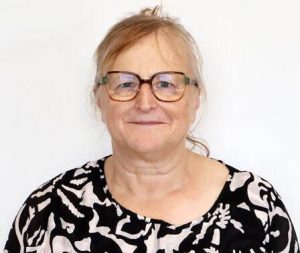
Dr Tanja Bohl
Victorian dermatologist Dr Tanja Bohl was appointed a Member of the Order of Australia for significant service to dermatology as a clinician and to women’s health.
A recognised leader in vulval disease, Dr Bohl has spent much of her career improving care for women with often overlooked and under-recognised dermatological conditions.
She currently serves as Clinical Lead of the Vulval Clinic at Jean Hailes for Women’s Health and has held leadership roles nationally and internationally, including president of the International Society for the Study of Vulvovaginal Disease and former president of the Australian and New Zealand Vulvovaginal Society.
Her contributions extend beyond clinical care. Dr Bohl helped establish specialised vulval disorders clinics at both the Royal Women’s Hospital and Melbourne Sexual Health Centre, helping build services that have improved access to multidisciplinary care for women across Victoria.
She has also contributed extensively to education and research through editorial board roles with the International Journal of Women’s Dermatology and the Journal of Lower Genital Tract Disease, helping advance knowledge in a field that has historically received limited attention.
Dr Lachlan Warren OAM
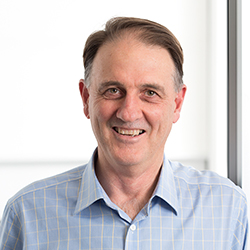 South Australian dermatologist Dr Lachlan Warren received a Medal of the Order of Australia for service to dermatology.
A former rural general practitioner, Dr Warren later trained in dermatology and went on to lead the Dermatology Unit at Adelaide’s Women’s and Children’s Hospital for more than two decades.
His career has included extensive outreach work across remote and regional Australia, including clinics in Darwin, Katherine and Ceduna, helping improve access to specialist dermatology services for underserved communities.
Dr Warren has also contributed significantly to specialist education, serving on the Australasian College of Dermatologists’ National Examination Committee and as Chief Examiner for the Pacific Dermatology Training Centre in Fiji.
His work has helped support dermatology training both within Australia and across the Pacific region.