
As Australian politicians have been forced to grapple with the flow-on effects of the Iran war, the nation’s supply chain for medical gases has come under the microscope.
Independent Senator Tammy Tyrrell raised the issue of medical helium supply in Federal Parliament last month, urging the government to reinstate helium to the Critical Minerals List, after its removal in December 2023. Coupled with the closure of Australia’s only helium plant in Darwin around the same time, this meant the nation was currently entirely reliant on importing the gas, she argued, adding that losing supply would mean “our MRIs would stop”[link here].
“Right now, our hospitals are vulnerable to global supply disruptions entirely beyond our control. A domestic helium supply is fundamental to a resilient health system,” she said.
One Nation Senator Malcolm Roberts also raised the importance of helium to healthcare. “Without it MRIs can’t operate, disrupting diagnostics for cancer, neurological conditions and more,” he told the Senate.
And it seems concern has spread beyond the halls of Parliament, with University of Western Australia’s Centre for Energy director Professor Dongke Zhang warning The Guardian of wide-ranging effects from any interruption [link here].
“Hospitals, across the nation, literally all of them use it to service MRI and other advanced diagnoses, and for running major research facilities in physics, in chemistry and, in my case, advanced energy technology,” he told the publication.
Liquid helium has been essential for MRI maintenance, acting as a coolant for the machines’ magnets so the machines can take high-quality images.
And there’s no doubt the war has impacted helium production. Strikes on Qatar, responsible for one third of the world’s supply, have sent prices rocketing. But should Aussie clinicians be worried about their patients missing out on MRI scans in the coming months?
Not just yet, says Royal Australian and New Zealand College of Radiologists president Dr Rajiv Rattan.
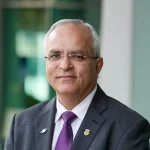
RANZCR president Dr Rajiv Rattan.
“The Royal Australian and New Zealand College of Radiologists (RANZCR) is not aware of any current impact on MRI services in Australia arising from global helium supply pressures,” Dr Rattan told the limbic.
This is in part because the new generation of MRI machines, increasingly prevalent across the country, don’t need as much helium as their predecessors.
“It is also worth noting that some newer MRI systems are low helium scanners which eliminate the need for helium top-ups,” Dr Rattan said.
“In the short to medium term, MRI services are expected to continue as normal. While there may be some isolated impacts, RANZCR does not anticipate any significant disruption to patient care.”
The college said it would continue to monitor the situation.
Meanwhile, a TGA spokesperson said the agency was also monitoring therapeutic goods supply in response to the Middle East conflict and was in contact with sponsors.
“We recently contacted medical helium sponsors directly and were advised that there are no current concerns. Enquiries about stockholdings should be directed to sponsors,” the spokesperson said.
“The TGA only regulates helium that is supplied as a therapeutic good or medical device accessory. We have not received information about any supply disruptions for medical devices that use helium.”
“The TGA will continue to engage with relevant stakeholders to monitor possible supply disruptions to therapeutic goods due to factors related to the Middle East conflict.”
We asked BOC Australia, a long term supplier of medical gases including helium, about current supply disruptions, but the company declined to provide comment.