A new national curriculum is seeking to reshape how doctors’ wellbeing is approached – moving beyond self-care to address what it takes to stay well in a system that can make that difficult.
Developed by the Doctors’ Health Alliance, the framework sets out a national approach to teaching doctors’ health across the profession, from medical school through to retirement.
In doing so, it shifts away from a model centred on individual wellbeing, often framed in terms of mental health, towards a broader understanding of how workplace culture, leadership and system design shape whether clinicians can stay well.
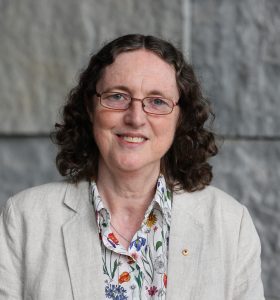
Dr Margaret Kay
“We developed the curriculum because we believe that many people who are teaching doctors’ health are focusing on a very narrow part of what we know doctors’ health and wellbeing to be,” Dr Margaret Kay, chair of the Doctors’ Health Alliance, tells the limbic.
“Most people, when they go to a talk about doctors’ health, hear a little bit about burnout, about self-care, and they’re told to go and see a GP. Those are probably the three key messages they receive. What we want to do is broaden that.”
At its heart, the curriculum reframes the problem itself.
Rather than locating distress within individual doctors, it points to the systems they work in – workload, workplace culture and leadership – and how those shape whether clinicians can stay well.
“Organisational factors cannot be ignored,” Dr Kay says.
“You can have an individual who is as well as possible, but if the organisation is not designed to support wellbeing, that person will still struggle.”
That shift also changes how resilience is understood.
“There’s sometimes a narrative that this is about making doctors more resilient,” she said. “But doctors are already resilient. This is about sustaining that resilience – not so that people can endure harm, but so that they can thrive.”
Developed outside traditional training structures, the curriculum reflects the Doctors’ Health Alliance’s experience supporting clinicians through the issues that most commonly impact their wellbeing.
The framework is built around individual, peer and organisational dimensions of health, but what distinguishes it is how it moves beyond abstract concepts into the realities of clinical practice.
Rather than focusing only on burnout or self-care, the curriculum addresses situations doctors encounter every day but are rarely formally taught.
That includes how to manage a “corridor consultation”, how to treat a colleague while maintaining appropriate boundaries, and how to navigate the tension between professional courtesy and safe clinical care.
It also brings into the open experiences that are common but often handled in isolation – including adverse events, the “second victim” experience after error, and the emotional and practical impact of complaints and regulatory processes.
Alongside this is a focus on system-level responsibility. Doctors are encouraged not only to recognise unsafe workplace conditions, but to understand how to advocate for change, evaluate wellbeing initiatives, and contribute to more sustainable models of care.
One of the most confronting areas addressed is a module titled “when a doctor dies”, which includes suicide awareness, organisational response and how to support colleagues in the aftermath of loss.
The curriculum formalises aspects of medical practice that have traditionally been left to informal learning – or not addressed at all.
“This is intended to be a broad framework,” Dr Kay says, explaining that the intention is that colleges, universities and hospital training teams will take up the curriculum and adapt and integrate it into their specific education program needs.
“It’s not about teaching these topics in isolation, but about integrating them into everyday clinical teaching.
“So you might be discussing a complex patient case, and at the same time exploring how the team supports each other, how clinicians process that experience, and how peer support operates in practice.”
Caring for doctors as patients
The curriculum also turns to a less visible, and often uncomfortable, part of practice – caring for doctors as patients.
“Being the doctor for a doctor is really quite an emotional experience, most people don’t realise that until they’re actually in the middle of the consultation,” Dr Kay says.
These encounters can carry a particular kind of tension, shaped by hierarchy and familiarity, she adds.
“What if they’re asking for something like clonazepam – do I just prescribe it because they’re my supervisor? Or are they testing me?”
In smaller or rural settings, those dynamics can become more complex.
“What if you’re rural and the only other doctor in town is your junior?”
The curriculum seeks to bring more structure and a space for conversation around these situations.
“One of the things we are going to be teaching is a framework for people to hang their thinking on,” she says. “So that as they go into that consultation, they can say, ‘this is what I need to think about.’ Clearly we need to empower doctors to know who they go to for advice in that situation”
Leadership, modelling and the hidden curriculum
Formal teaching is only part of how doctors learn – much of it is shaped by what is modelled in everyday clinical work.
“If we don’t see our leaders in action, it’s very hard to learn how to deliver the kind of care that supports doctor wellbeing,” Dr Kay said.
How senior clinicians respond to pressure, support colleagues and navigate difficult situations becomes part of what is absorbed over time.
The curriculum makes that visible, linking wellbeing to leadership and encouraging senior doctors to model behaviours that support reflection, peer care and psychological safety.
That broader shift has been welcomed by the Royal Australasian College of Physicians, which says the curriculum aligns with existing training priorities, while identifying areas for further development.
The College has called for greater attention to the experiences of international medical graduates, Aboriginal and Torres Strait Islander doctors, and clinicians working in rural and regional settings, as well as the burden placed on supervisors.
Those concerns are acknowledged by the Doctors’ Health Alliance, which sees them as part of ongoing development.
“This work could take a lifetime,” Dr Kay says. “But we see these topics as critical and understanding lived experience is key.”
She pointed to the realities facing clinicians outside metropolitan centres.
“If you are working in a very remote environment and managing your own health – who supports you? Who monitors your care? Who do you talk to when access to care may be limited? These are real challenges, and we want to create space for those conversations.”
The curriculum also brings into focus another area often discussed quietly, if at all – complaints and medico-legal processes.
“Medico-legal processes can take years, and many doctors have no idea what to expect when they first enter that system,” Dr Kay says.
“There’s also stigma around complaints and investigations. Even though these experiences are common, they can feel isolating because people don’t talk about it. We want doctors to understand that these situations are not unusual, and that support is available.”
Asked what doctors’ wellbeing could look like in five years if the curriculum is widely adopted, Dr Kay points to a shift in both care and culture.
“Doctors will be able to deliver safer, more compassionate care to their patients and they’ll also be more compassionate with each other,” she says. “That includes their teams more broadly – their allied health colleagues, nursing teams, and administrative staff.”
At its core, she says, is a change in how doctors see themselves.
“It’s very easy for us to place ourselves in an exceptional category. But we need to come back to the understanding that we are human.”
That shift is reflected in how clinicians respond to one another.
“It means being kind to each other, listening to each other, and not panicking when someone speaks up,” she says. “I would really like to see us encourage bravery and courage – because at the moment, particularly with things like medico-legal issues, people feel they can’t tell anyone.”
“We need to be able to speak openly without stigma – without that sense that if you say something, you’ll suddenly be isolated or pushed out into an uncomfortable space where you wish you hadn’t spoken.”
Instead, she describes something simpler.
“It should just be a conversation where someone says, ‘Yes, that happened to me too,’ or ‘I understand – it’s hard.’ That kind of everyday, human response.”