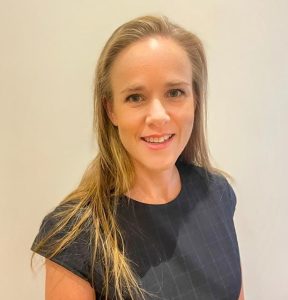
Dr Sharon Ford
The new ANZSN president is looking forward to juggling the demands of the role with her existing clinical and research commitments, ensuring continuity for the society at the same time as bringing fresh energy to its leadership, and balancing local and regional priorities with an expanded international profile.
Dr Sharon Ford, deputy director of nephrology at Austin Health, told the limbic that her long standing passion for the society will see her through the acknowledged challenges.
“I’ve been a member of the society since I was in my advanced training, and have had some really great experiences – first at the ANZSN Congress presenting some of my own research and attending my supervisor’s and other mentors’ presentations, and realising that there’s a really connected community throughout Australia.”
In 2019 Dr Ford stepped into the role of deputy chair of the ANZSN Scientific Program and Awards Committee which she said was a great entry position within the organisation.
“I subsequently became a council member then in 2021 I undertook the role of the Honorary Executive Officer so I got more insight into the running of the society and how we manage the committees, etcetera.”
Dr Ford has served as President-Elect from 2023 and says she has benefited from the initial encouragement of and two years working closely with Professor Rathika Krishnasamy.
“It’s been amazing to have that sort of mentoring, because she’s very dynamic, very efficient, and just has a very positive outlook. She’s very much a problem solver at all points so that’s been a great experience.”
Dr Ford is understandably proud of the ANZSN Council achieving gender equity for the first time – the culmination of years of ongoing work led by the Equity, Diversity and Inclusion Committee.
“I think it’s really important to model equitable representation in leadership. It’s also the first time we have had a female president handing over to another female president. I think that’s really good for our society to see and I think it’s good for the younger nephrologists given there’s a lot of women in the younger generations in nephrology.”
She also enjoys the multidisciplinary nature of ANZSN including clinicians, research scientists and allied health professionals, along with “some really engaged and active consumers”.
“It really aligns well with what I do in my role at the Austin. For example, I’ve just recently set up an early chronic kidney disease telehealth service here that’s going to be nurse-led. It will provide early kidney disease management to patients in the community and help support CKD management in primary care.”
“One of the roles of ANZSN is looking at the bigger picture of how we facilitate and increase funding for such programs and how we engage effectively with our key stakeholders to promote awareness of the burden of chronic kidney disease.”
Dialysis capacity
Dr Ford said that national issues such as dialysis capacity continue to be a priority for the society.
“We’re doing a lot of ongoing work in that area through our collaboration with ANZDATA …trying to identify and promote where the critical deficiencies lie. It’s really important to be able to define where there are resource issues and what the nature of those resource issues are.”
The recently released ANZDATA/ANZSN Collaborative Special Report, previously reported in the limbic [link here], identified significant variation in haemodialysis staffing levels across units in Australia and New Zealand with two thirds of units in Australia and 80% of units in NZ not able to provide care in the patient’s preferred location,” she said.
“More than half the units are implementing restrictive measures in haemodialysis provision to address their capacity constraints.”
She said the data will help individual kidney units advocate for infrastructure upgrades and improved care pathways, as well as state and regional authorities to prioritise dialysis capacity in service planning and expand patient access to dialysis.
ANZSN, in partnership with Kidney Health Australia and Kidney Health New Zealand, will also continue to play an important role in advocacy with federal authorities.
“And then there’s more advocacy at government levels through our support of the Parliamentary Friends of Kidney Health, established by Kidney Health Australia. That’s a really important example of a collaborative effort between key stakeholders that helps the kidney care community have a stronger voice to government to highlight the needs of patients with kidney disease in considerations around state and national funding.”
Dr Ford said the “lofty goals” to End Dialysis by 2050 championed by partner Kidney Health Australia were deliberately provocative.
“We’re in an era in nephrology where we have treatments for people with chronic kidney disease, and if we can get people onto the right treatment at early stages, the reality is that we can reduce the burden of kidney disease. We can slow progression and delay kidney failure. to We have the tools to prevent kidney failure in vast numbers of people if they’re on the right therapies.”
“And that’s really why there is such a push at the moment and in nephrology throughout the world – to recognise that chronic kidney disease is a major health problem. It’s one of the increasing causes of death throughout the world yet the public’s knowledge of CKD is pretty low. That’s a huge problem when we now have therapies that people are not able to access partially because of poor recognition.”
“If we can get people onto treatments that will then help us better target the resources we have to a smaller number of people with kidney failure in the future.”
Her remit as ANZSN president extends beyond Australia and New Zealand into the Asia Pacific region and beyond.
“We’ve set up the Pacific Working Group in 2024 to engage with and support our Pacific neighbours who have a high burden of CKD with limited resources for detection, prevention or kidney replacement therapy.
“Dr Grace Baiwan from PNG attended our Trainee Weekend in May which was fantastic – that we could support her attendance …giving her a valuable training opportunity and learning to help manage patients in PNG and share with fellow doctors and nurses.”
She said Australian trainees also benefit from exposure to some of the “real-world” challenges in other countries and initiatives that they might be interested in contributing to.
“It’s really important for ANZSN as a society to maintain and continue to foster the collaborations that we have internationally. We have a relatively new collaboration with the European Renal Association,” she said.
She and ANZSN Honorary Treasurer Drew Henderson from New Zealand attended the international societies meeting at the ERA Congress in Vienna earlier this year.
“It was a really great opportunity to meet with all the other society presidents and representatives and hear about some of the advocacy and public awareness efforts that other societies are trying to address the burden of chronic kidney disease. I think that collaboration allows us to learn from other people’s successes and to apply it in our own and neighbouring regions,” she said.
“The reality of the society is we’ve got a lot of projects underway. It’s a really exciting time. One of the things that will be voted on at the AGM this year is the Immediate Past President staying on Council for an extra 12 months to help continue the momentum of those projects.”
Research
Facilitating nephrology research is yet another priority area – to better understand causes of CKD and identify new therapeutic targets.
“We’ve got amazing talent and expertise in our researchers in Australia, but we need to support them, and we need to advocate for funding for kidney disease research, which obviously is a challenging space.”
She said the Kidney Research Alliance, between Kidney Health Australia and ANZSN, was formalised at the 2025 Dialysis Nephrology and Transplantation (DNT) Workshop and the steering committee is now established.
“That’s where the Society has a bigger picture approach and those longer term goals and structures in place to sustainably facilitate that sort of work. It’s a really important endeavor to help the researchers within our society which also helps clinicians in terms of better understanding kidney disease and new therapies to offer, including for rarer and more severe kidney diseases.”
Dr Ford said the ANZSN was striving to meet the needs of its members with a vision of quality kidney care for all people.
“We have some amazing people contributing to the work of our society, especially those who are chairing our committees…they do a huge amount of work for the society and we can’t thank them enough. We need to continue to support the hard work of all our committees and ensure we have sustainable structures and supports in place to continue the important work the society does long into the future.”