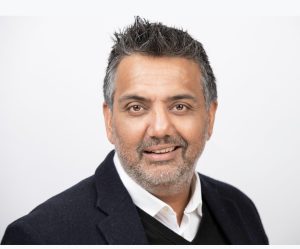
Dr Prem Ram
Targeted support for carers has the opportunity to improve the end-of-life experience for cancer patients and their families.
Palliative care physician Dr Prem Ram told the Thoracic Oncology Group Australasia Annual Scientific Meeting that his personal experience of caring for his wife after her breast cancer diagnosis was life and practice changing.
Dr Ram, Clinical Lead of the Specialist Palliative Care Rural Telehealth Service based on the Sunshine Coast, said in taking time off work to support his family he found the best advice came from a friend who had lived experience as the carer of a cancer patient.
Having a 24/7 phone number for cancer care nurses support was also incredibly useful, he said.
On returning to work, Dr Ram recognised that some of his patients might not want to engage with palliative care, share how they were coping, or talk about death and dying, yet their partners or carers might.
“So I was wondering, how can we make this a little bit more targeted for carers? Research has shown that carer targeted interventions improve patient outcomes and this is beautifully demonstrated in cancer care and in dementia care,” he said.
“Families value timely communication, care trajectory transparency, and around the clock support. That targeted support for carers really empowers them to be confident in looking after their loved ones.”
His model of care has layered a carer case conference onto the traditional palliative care approach.
Depending on the needs of the carer, the case conference can include the community nurse, a social worker for advanced care planning and bereavement support, a pharmacist for education on medications and injection training, an occupational therapist for education regarding patient transfers, and a senior medical officer for education on disease trajectory and expected symptoms.
Patient attendance was dependent on the needs of the carer.
“Now the patient doesn’t necessarily have to be involved in those conversations. So many times patients say to me, ‘I don’t really want to know the story’, but their caregiver does. The husband wants to know what symptoms they are going to face and how they are going to manage at two o’clock in the morning.”
Dr Ram said it was important to help build carer confidence so they could look after their loved one in the community.
Initially, the discussion might focus on advanced care planning or how to talk to the children about a parent having cancer, he said.
“So we would help them with that, help support them in their approaches, and that develops the relationship with social work when it comes to bereavement.”
“The second part is where our pharmacists get involved, and we do a lot of end-of-life care at home. So, how do we do injections in the home? How do you work out your breakthrough medications? All this support can be given to the carer, so they can then look after their loved one at home.”
As a practice tip, he said pharmacy education was valuable towards the end of the week ahead of any symptoms arising over the weekend.
“And then there’s the occupational therapist who will help with patient handling such as how to turn the patient.”
He also recommended health professional and consumer resources from the Caring at Home project [link here].
Dr Ram said the carer case conference program was definitely sustainable.
“If a patient has a carer that’s confident looking after their loved one, that means they’re at home longer. If there’s any drama, they’ll call 24 hours to get some support but try to keep their loved one at home. If they do go into hospital, they will discharge earlier because they’re comfortable, and it may even reduce our community nurse demands.”
“We’ve got some really good nurses, but there are just not enough to help support all those patients.”
Financially, he said the program generates revenue via the Multidisciplinary Case Conferences Medicare Items.
He said tools such as the carer equivalent of patient-reported outcome measures and patient-reported experience measures were necessary while other future development might include peer mentorship groups for carers.
“I think we can certainly elevate the model of care of how we look after our patients. For me, this was a personal transition that reshaped how I understood and maybe overlooked carers.”